
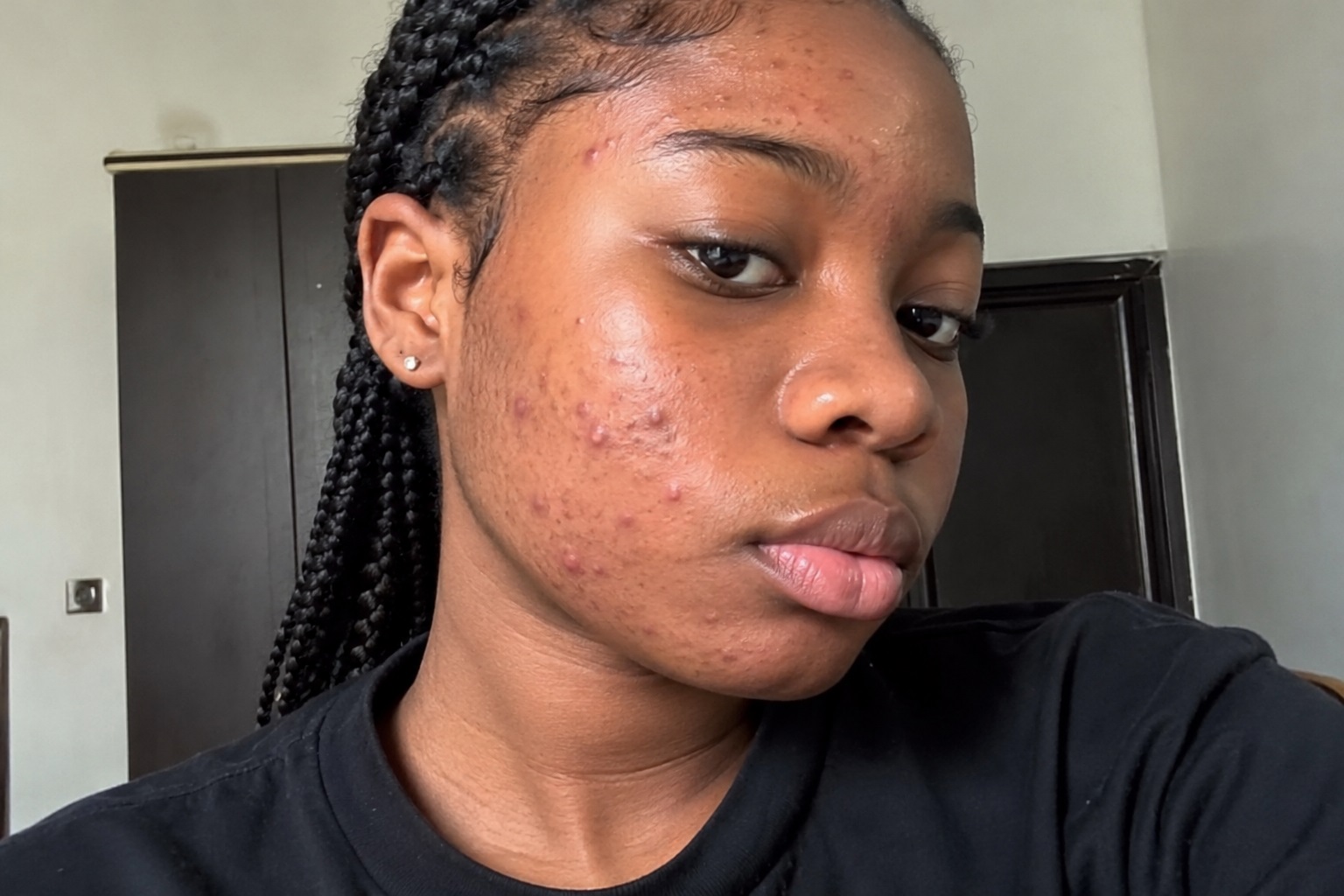
Teenage acne can start with just a few small pimples.
One day, your teenager notices a few bumps on their forehead. A few weeks later, they are spending more time in front of the mirror, checking their cheeks before school. They stop taking pictures. They start covering their face with their hands. Then the search begins:
“Best cream for teenage acne.”
“Fast acne treatment.”
“How to clear pimples in 3 days.”
Before you know it, there are several products on the bathroom shelf — a cleanser from one brand, a cream recommended by a friend, something trending on TikTok and perhaps another product someone promised would “dry everything up.”
But here is the important question:
When is teenage acne something you can manage with a simple skincare routine, and when should your teen see a dermatologist?
Is Teenage Acne Normal?
Yes. Acne is extremely common during adolescence.
As puberty begins, hormonal changes can increase oil production in the skin. When excess oil, dead skin cells and other factors contribute to blocked hair follicles and inflammation, acne can develop.
The American Academy of Dermatology reports that acne affects about 85% of adolescents. American Academy of Dermatology
And there is Nigerian research that brings this even closer to home.
A study of secondary-school students in Kaduna, Nigeria, examined 418 students aged 11–19 and found acne in 90.7% of those examined. The prevalence increased with age, reaching 97.1% among students aged 17–19 in the study. Most cases were mild, but the findings show just how common acne can be among Nigerian teenagers. PubMed
So if your teenager has acne, they are certainly not alone.
But there is an important difference between saying “acne is common” and saying “there is nothing we need to do about it.”
Those are not the same thing.
When Should You Stop Saying “It’s Just Teen Acne”?
Imagine your teenager has a small cut.
You probably would not ignore it if it kept getting bigger, became increasingly painful, started showing signs of infection or left significant damage.
Acne deserves similar attention when it becomes persistent, painful or starts causing scarring.
You should consider professional assessment if your teenager has:
- Frequent or persistent breakouts
- Large, painful pimples
- Deep bumps or nodules
- Acne that keeps getting worse
- Breakouts on the face, chest or back
- Dark marks appearing after pimples heal
- Early signs of acne scars
- Acne that has not improved despite consistent treatment
- Significant irritation from products
- Emotional distress or loss of confidence because of their skin
The American Academy of Dermatology notes that people with acne can benefit from seeing a dermatologist and that you do not necessarily need to have severe acne before seeking professional care. American Academy of Dermatology
Why Treat Acne Early?
One of the biggest mistakes parents can make is assuming that acne should simply be left alone until the teenager “grows out of it.”
Sometimes acne does improve with time.
But sometimes it leaves something behind.
Think of acne like a small fire.
The earlier you deal with the fire, the easier it may be to prevent it from spreading. If you allow inflammation to continue, you may eventually have a bigger problem to deal with.
Deep and painful acne, particularly nodules and cysts, is more likely to result in scarring. Picking, squeezing or scratching pimples can also increase inflammation and the risk of scarring and discoloration.
This is particularly important for teenagers with melanin-rich skin because a pimple may disappear while leaving a dark mark behind.
And sometimes, what a parent calls a “dark spot” may actually be something different from an acne scar.
Acne Marks Are Not Always Acne Scars
This is an important distinction.
After a pimple heals, your teenager may be left with a flat brown or darker mark.
That may be post-inflammatory hyperpigmentation (PIH) rather than a true acne scar.
A true acne scar can involve a change in the texture or structure of the skin, such as a depression or raised area.
The two concerns can look similar to an untrained eye, but they are not necessarily treated in exactly the same way.
This is one reason why randomly buying another “dark spot remover” may not solve the actual problem.
First, you need to know what you are treating.
What Does a Dermatologist Actually Do?
Some parents hear “dermatologist” and immediately think:
“Does my child need strong medication?”
“Will they prescribe something expensive?”
“Will they recommend procedures?”
Not necessarily.
A professional acne consultation starts with assessment.
The dermatologist needs to understand what type of acne your teenager has, how severe it is, how long it has been present, what products have already been used and how the skin has responded.
The treatment plan may then involve skincare products, prescription medication, lifestyle recommendations or other treatments depending on the individual case.
There is no single acne treatment that works perfectly for every teenager.
The American Academy of Dermatology’s updated acne guidelines support several evidence-based treatment options, including benzoyl peroxide, topical retinoids, salicylic acid, azelaic acid and, when appropriate, prescription treatments such as oral antibiotics or isotretinoin for specific cases.
That does not mean every teenager needs every treatment.
It means treatment should be matched to the person.
What About All Those Acne Products Online?
This is where things can become confusing.
Your teenager sees someone online saying:
“This cleared my acne in seven days.”
Another person says:
“Use this acid.”
Someone else recommends a scrub.
Then another person says:
“Stop using everything and use only natural products.”
The problem is that your teenager’s skin is not necessarily the same as the person in the video.
Even worse, constantly changing products can irritate the skin.
The American Academy of Dermatology advises giving acne treatments time to work. Improvement may take several weeks, and clearer skin can take two to three months or longer. Changing products every few days may irritate the skin and make things worse.
So if your teenager has used three different acne products in two weeks because none worked “fast enough,” it may be time to stop experimenting and get professional advice.
What Should Teenagers Avoid Doing?
There are a few common habits that can make acne and its aftermath worse.
1. Picking and squeezing pimples
We understand the temptation.
There is a big pimple on your face, and you want it gone immediately.
But squeezing can increase inflammation and raise the risk of infection, dark marks and scarring.
2. Scrubbing aggressively
Acne is not dirt that needs to be scrubbed off.
Harsh scrubbing can irritate the skin and make an already inflamed skin barrier more uncomfortable.
3. Changing products constantly
Give an appropriate treatment time to work.
4. Using random bleaching or “strong” creams
A product being strong does not automatically make it better.
Some products may irritate the skin or be inappropriate for a teenager’s particular condition.
5. Copying someone else’s prescription
A treatment that was appropriate for one person may not be appropriate for another.
What If Your Teen Says, “I’ve Tried Everything”?
This is a sentence dermatologists hear often.
A teenager may have tried a cleanser, a cream, a face mask, a homemade remedy, a product from a friend and something recommended on social media.
But sometimes “I’ve tried everything” really means:
“I’ve tried many things, but I haven’t followed one appropriate treatment plan consistently.”
There is a difference.
Acne treatment often requires patience.
According to the American Academy of Dermatology, some people begin to see improvement after about four to six weeks, while clearer skin can take two to three months or longer.
That is why consistency matters.
Your teenager may not wake up tomorrow with completely clear skin.
The goal is to develop a sensible treatment plan, follow it consistently and adjust it when necessary.
Teenage Acne Is More Than a Skin Problem
There is another part of acne that parents sometimes underestimate.
How it makes the teenager feel.
The Kaduna study mentioned earlier found that 47.7% of students with acne reported feeling “very sad/unhappy” about their acne. PubMed
Think about that for a moment.
A teenager may still attend school, talk to friends and appear perfectly fine while privately feeling uncomfortable about their appearance.
Maybe they avoid selfies.
Maybe they don’t want to attend an event.
Maybe they constantly check the mirror.
Maybe someone at school has made a comment about their skin.
This does not mean every teenager with acne will experience significant emotional distress. But it does mean we should not dismiss their feelings with:
“Don’t worry. Everybody gets pimples.”
For the teenager experiencing it, it can feel like a very big deal.
Parents can help by taking the concern seriously without making the teenager feel that their worth depends on having perfect skin.
How Parents Can Help
If your teenager has acne, your role is not to become their second dermatologist.
Your role is to support them.
Listen when they talk about their skin.
Avoid teasing them about their appearance.
Discourage picking and squeezing.
Don’t keep buying random products every time someone recommends a new one.
And if the acne is persistent, painful or leaving marks and scars, consider getting professional advice.
The goal is not to make your teenager feel that something is wrong with them.
The goal is to help them take care of their skin properly.
7 Signs Your Teen Should See a Dermatologist
If you are wondering whether it is time to book an appointment, look out for these signs:
1. The acne keeps coming back.
Breakouts continue despite consistent skincare.
2. The pimples are painful or deep.
Deep nodules and cysts require more attention because they can be associated with scarring.
3. The acne is getting worse.
Don’t wait until the problem becomes severe before seeking help.
4. Your teen is developing dark marks or scars.
Early management may help reduce the risk of lasting acne scars.
5. Products are irritating the skin.
Burning, excessive dryness or worsening irritation may mean the current routine needs to be reassessed.
6. Your teenager has tried several products without improvement.
A proper assessment can help determine whether the treatment approach needs to change.
7. Acne is affecting your teenager’s confidence.
Skin health is not only about what happens on the surface. Emotional wellbeing matters too.
Frequently Asked Questions
Is teenage acne normal?
Yes. Acne is very common during adolescence and often begins around puberty. However, common does not mean it should always be ignored.
Should I take my teenager to a dermatologist for acne?
You do not need to wait until acne becomes severe. A dermatologist can assess the acne, determine its severity and recommend an appropriate treatment plan.
Can teenage acne cause permanent scars?
Yes. Deep, painful acne is more likely to scar, and picking or squeezing breakouts can increase the risk. Early and appropriate acne treatment can help reduce the risk of scarring.
How long does teenage acne treatment take?
It varies. Some treatments may show improvement within several weeks, while clearer skin may take two to three months or longer. Consistency is important.
Should teenagers pop their pimples?
It is better not to. Picking, squeezing or scratching can increase inflammation and the risk of dark marks, infection and scarring.
Can teenagers use adult acne products?
Some acne treatments are used across different age groups, but the right product and strength depend on the individual’s skin and circumstances. It is better to choose treatment based on proper assessment rather than age labels alone.
Does every teenager with acne need medication?
No. Treatment depends on the type and severity of acne and the individual’s needs. A dermatologist can help determine the most appropriate approach.
Don’t Wait Until Acne Becomes a Bigger Problem
Teenage acne is common.
But your teenager does not have to simply suffer through it because someone says, “It’s just puberty.”
If the acne is persistent, painful, worsening, leaving dark marks or scars, or affecting your teenager’s confidence, it is reasonable to seek professional advice.
And remember: treating acne is not about making your teenager feel that they need “perfect skin” to be confident.
It is about helping them understand their skin, manage their acne properly and reduce the risk of longer-term problems.
Is It Time to Get Your Teen’s Acne Assessed?
If your teenager is struggling with persistent acne, painful breakouts, dark marks or early acne scars, don’t keep guessing which product to try next.
Book a dermatology consultation at Doo Havilah Aesthetics in Abuja.
Our team can assess your teenager’s skin and recommend an appropriate treatment plan based on their individual concerns.
Doo Havilah Aesthetics
Abuja, Nigeria
Call or WhatsApp: 0701 620 2776
Your teenager’s skin deserves proper care—not endless trial and error.